Train - Recover - Adapt - Improve

Online Running Coach UK | Personalised Training Programmes
"Is your marathon weight loss actually dehydration? Discover the 'Glycogen-Water Paradox' and why a 2% weight loss is the performance sweet spot. Expert science-based hydration tips from a UKA Endurance Coach and Online Running Coach UK.
2/22/20262 min read
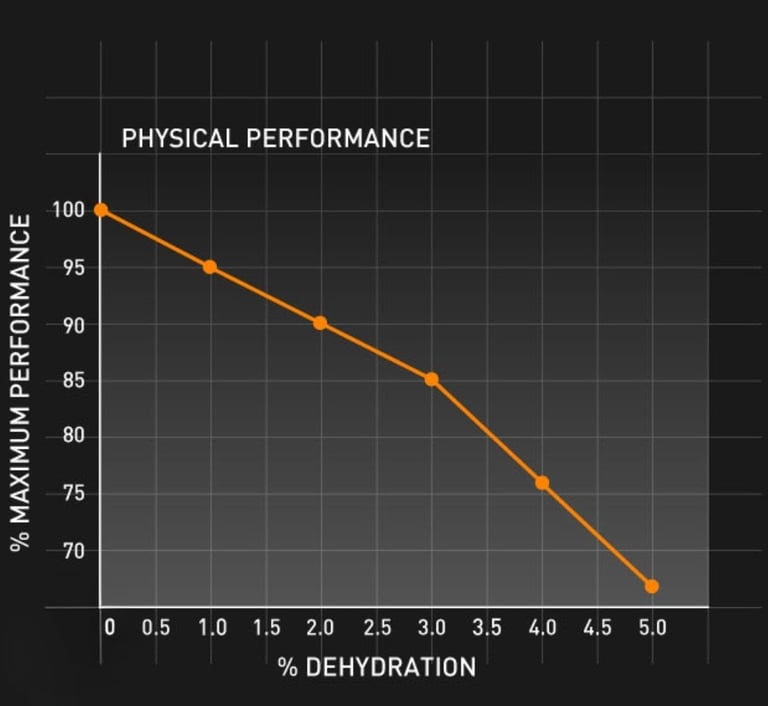
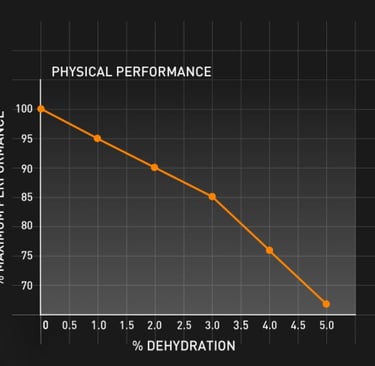
Every marathon runner knows the post-race ritual: stepping on the scale and seeing a 2kg to 4kg drop. The immediate instinct is to start chugging water to "replace the loss." But if you are chasing a sub-3-hour marathon, you need to understand the deeper physiology.
As a UK Athletics Endurance Coach, I tell my athletes: Not all weight loss during a marathon is fluid loss. If you try to replace every lost gram with water, you risk a dangerous condition called hyponatremia.
1. The Glycogen-Water "Bonus"
Your muscles store roughly 500g to 700g of glycogen (carbohydrate fuel). However, glycogen is a "wet" fuel. For every 1 gram of glycogen stored in your legs, your body bonds it to 3 to 4 grams of water.
When you "hit the wall" or deplete your stores during a race, you aren't just burning the 500g of carbs; you are also releasing about 1.5kg to 2kg of water directly into your bloodstream. This is "metabolic water" that was already inside you. It helps maintain your blood volume even if you aren't drinking.
2. Breathing Out the "Solid" Mass
We often think we "burn" fat, but we actually exhale it. Through the process of oxidation, the carbon atoms in your fat and carbohydrates are converted into CO2.
Carbohydrate Burn: ~500g
Fat Burn: ~150g
Total "Solid" Loss: ~0.6kg
In a 3-hour marathon, you physically breathe out and sweat out nearly a kilogram of non-fluid mass.
3. The Performance "Sweet Spot"
Because of this "hidden" water release and fuel mass loss, the goal isn't to stay at 0% weight loss.
Acceptable Loss: 2% to 3% of body weight.
Why? Carrying 2kg of extra water just to keep the scale balanced is like running with a 2-litre bottle of Evian strapped to your back. It increases your "energy cost of transport" and slows you down.
Coaching Verdict
For an athlete like "Tony" (who dropped from 3:27 to 2:54), we calculate fluid needs by subtracting the 0.7kg of fuel mass and 1.5kg of glycogen-water from his total scale loss. This ensures he stays light, fast, and perfectly hydrated without over-drinking.